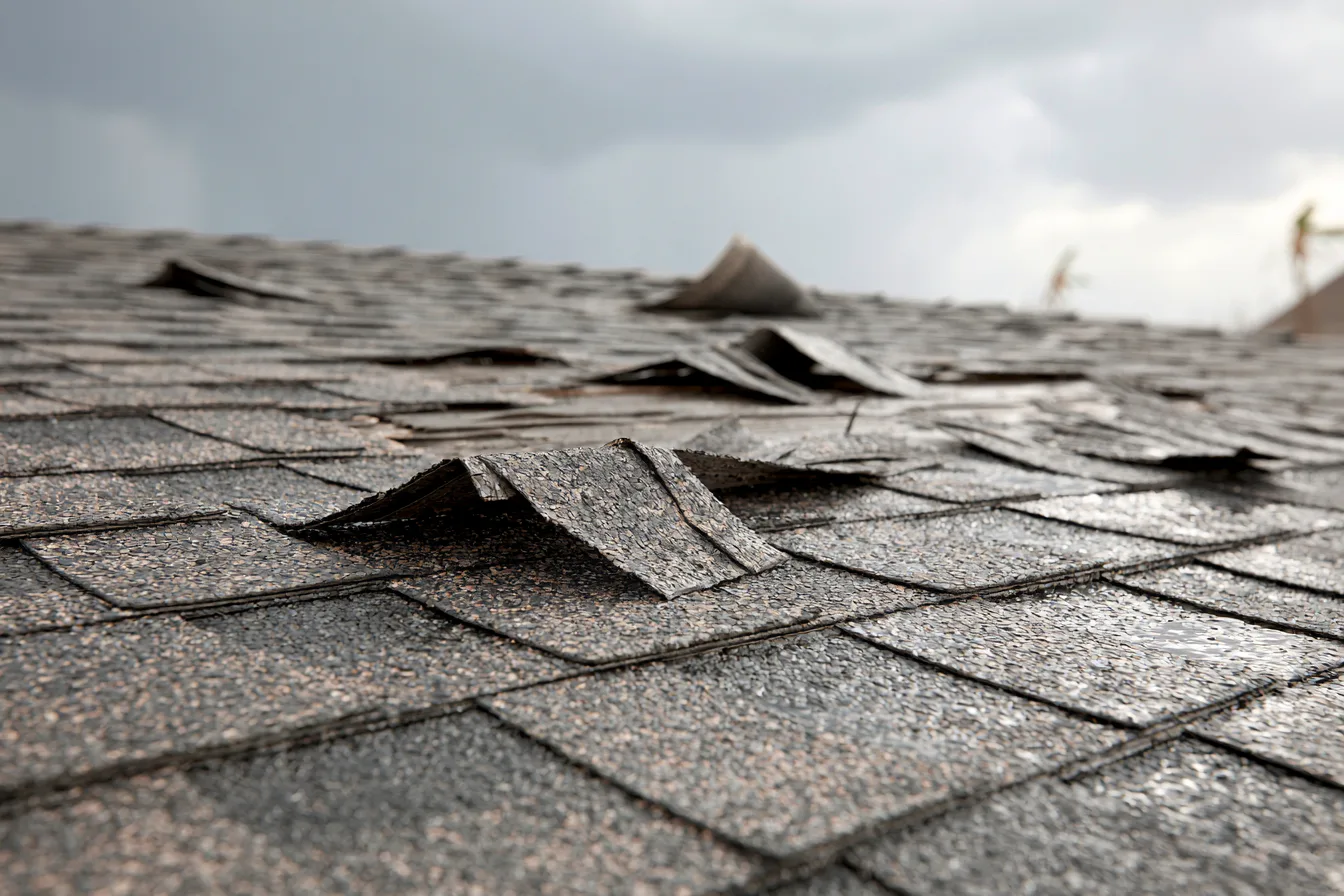
Storm damage roof repair in Independence, MO
Missing material, a new leak or a concern after hail deserves a closer look at your roof. Start with the condition at the property.
A free inspection. A closer look at the roof. A useful next step.
Have your Independence roof checked after the storm
The morning after a storm can bring scattered branches, changed shingles and plenty of roofing activity nearby. Your roof still needs its own assessment. The size of hail reported elsewhere or the work on a neighbor’s home does not establish what happened at your address.
An inspection looks for current damage and the roof parts involved. That may lead to temporary protection, a localized repair or a wider project. The lasting work needs to address the damaged material and its connections, including the layers below if they were affected.
Hail and wind affect roof parts differently
Storm damage is rarely dramatic from the driveway. Here is what a roofer looks for up close, and why each kind matters.
- Hail on shingles
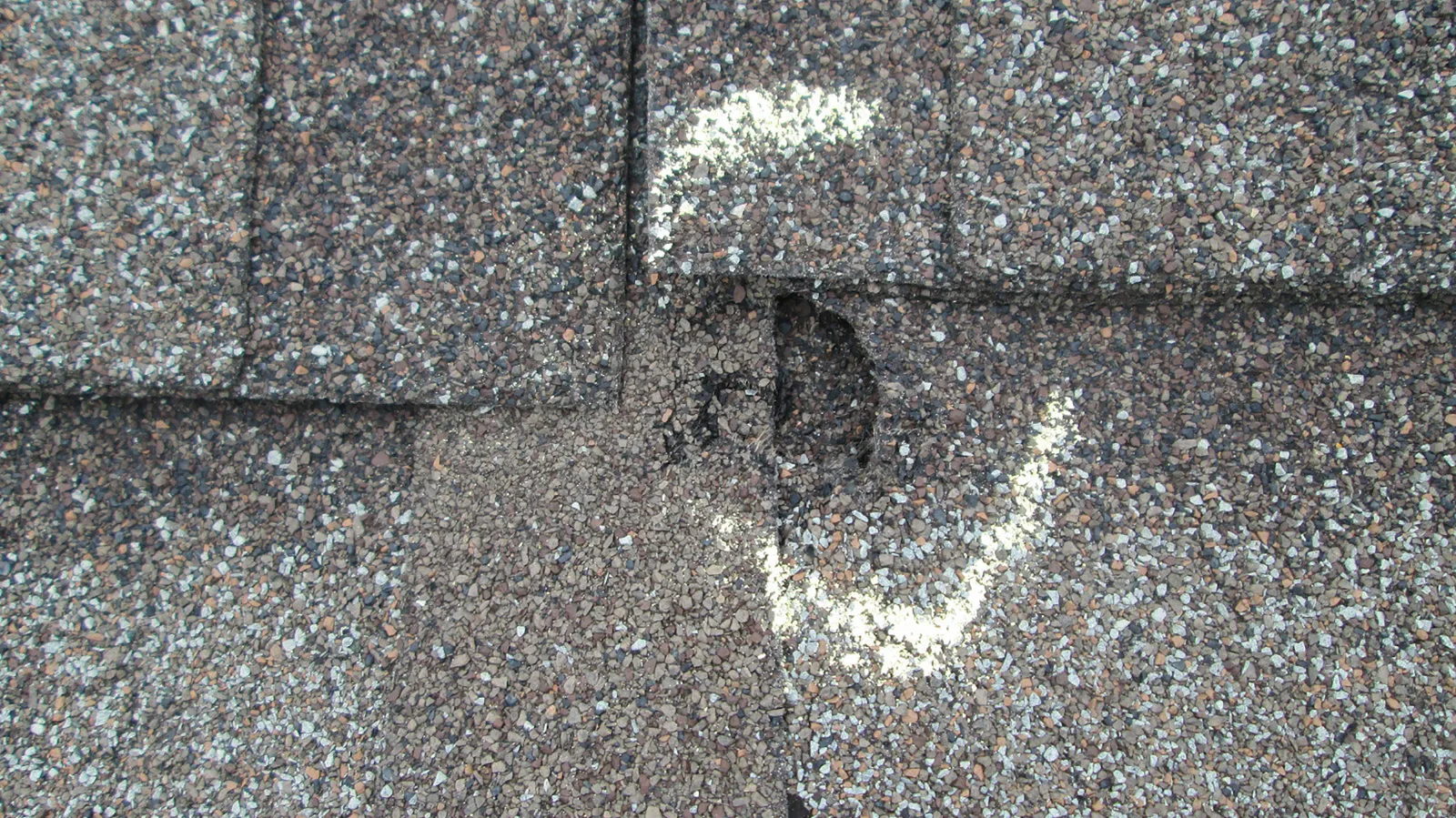
A hailstone that hits hard enough knocks the protective granules off and can bruise the mat underneath, leaving a soft spot you can feel with a thumb. The bare spot then weathers faster than the roof around it. Hail marks are roughly round and scattered at random across the slope. Blistering, foot scuffs and ordinary wear can look similar from a distance, which is why this gets checked up close, slope by slope.
- Hail on metal
Soft metal keeps a record. Dents in vent caps, flashing, gutters and downspouts show that hail fell and give a rough idea of its size and direction. They do not prove the shingles were damaged, but they tell the roofer where to look hardest.
- Wind-lifted shingles
Wind works on the edges. It breaks the adhesive strip, lifts the tab and folds it back, leaving a crease across the shingle. A creased shingle has a cracked mat and can tear off in a later storm even if it has settled back down and looks fine from the street. Missing tabs, lifted ridge caps and loosened metal at the roof edge belong to the same family.
- Branches and debris
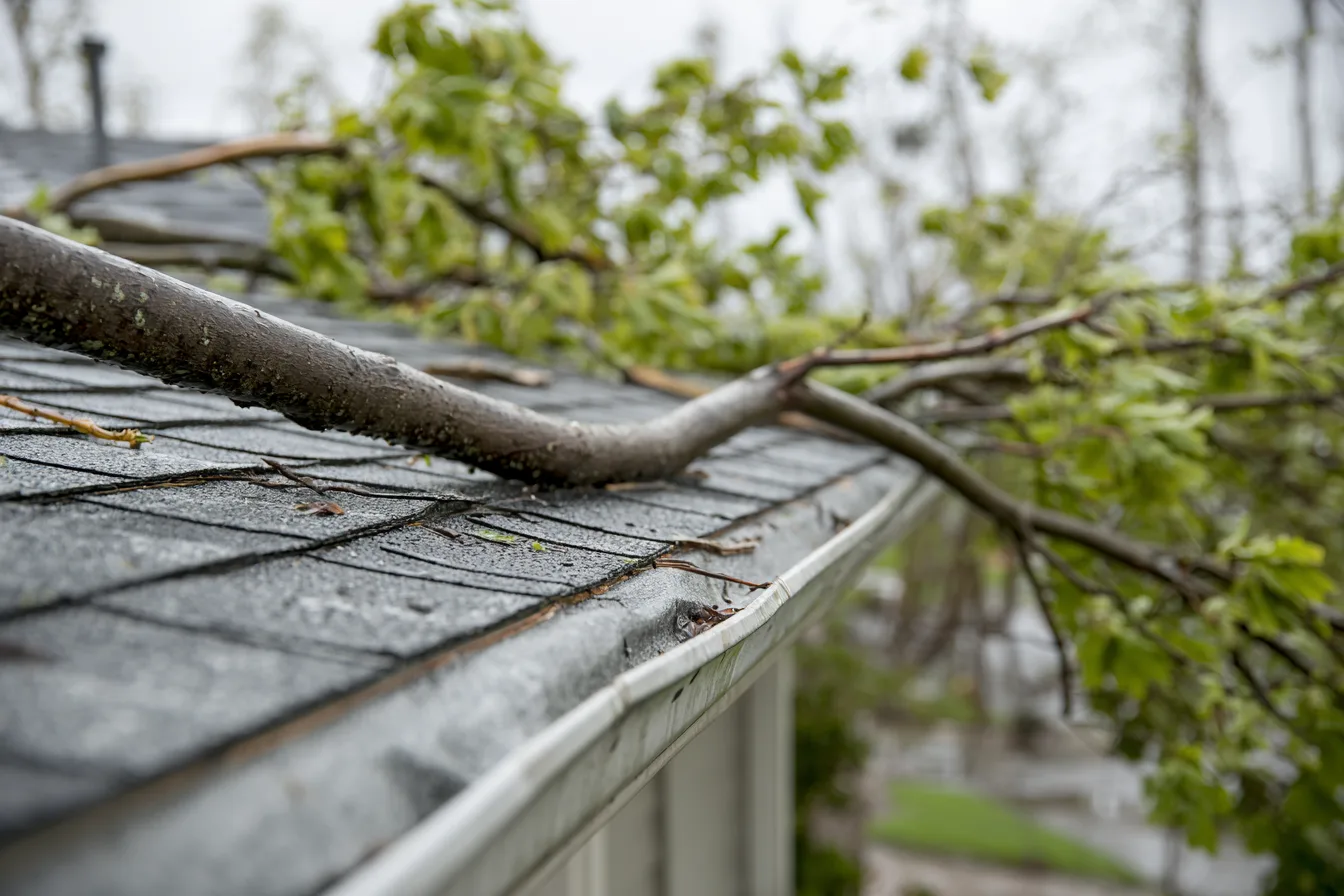
A limb can puncture the shingles, crack the decking underneath or crush a gutter and the fascia behind it. Stay clear of hanging limbs. Once the limb is off, the roofer checks the wood under the impact, because a cracked deck will not hold the repair.
When a storm leaves water inside
Keep people clear of the affected area
Move belongings only if you can do so safely. Stay away from a sagging ceiling, exposed electrical equipment or a visibly unstable area. Immediate danger belongs with emergency services.
Ask about temporary protection
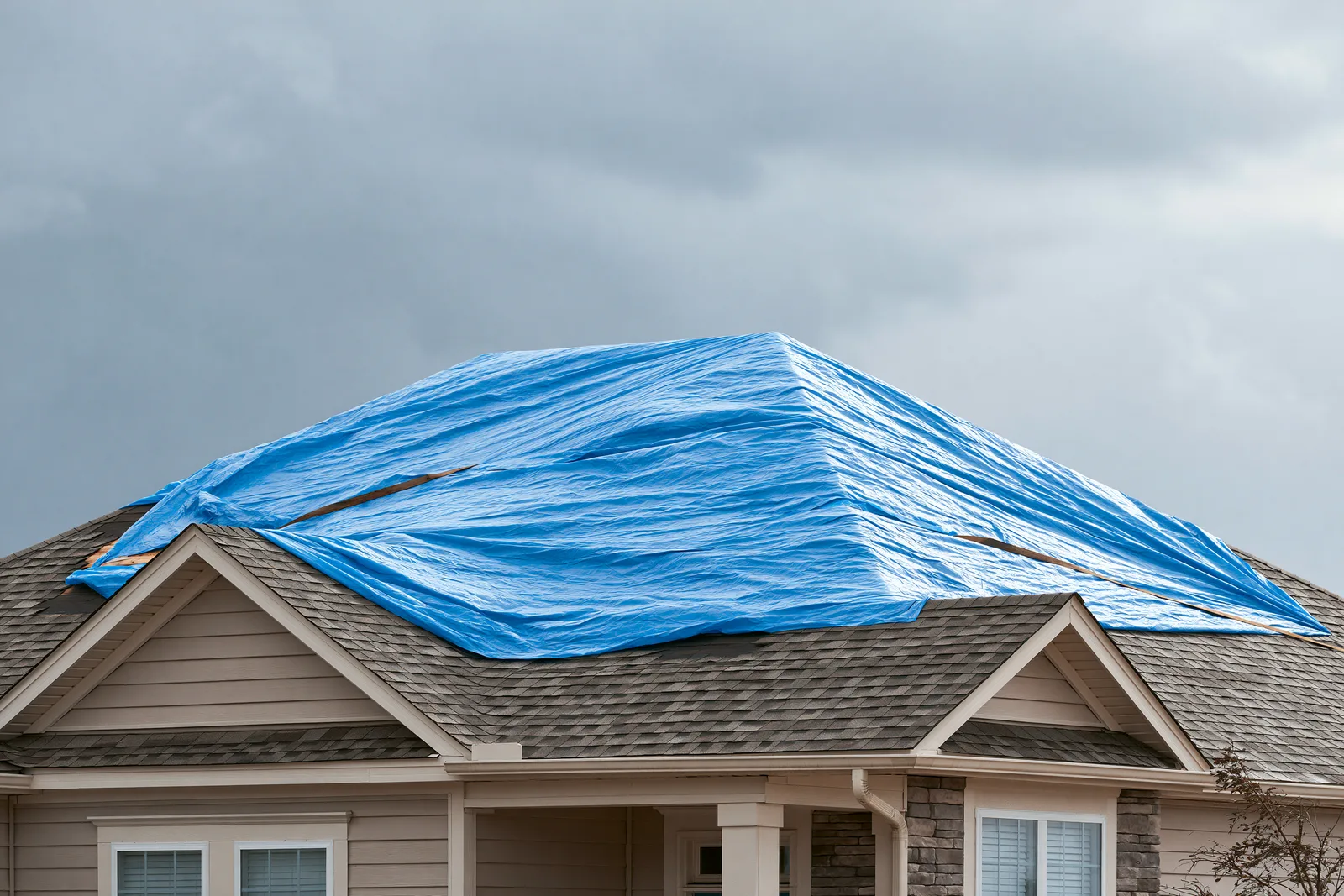
A tarp or other temporary measure may limit further entry while permanent work is arranged. It needs safe professional access and does not replace repair of the failed roof assembly.
Keep a simple record
Note when water appeared and photograph accessible damage from a safe place. Keep repair estimates and receipts, and ask your insurer what documentation and next steps your policy requires.
From temporary cover to a lasting storm repair in Independence
A tarp buys time. It stops water getting in while the permanent work is sorted out, and that is all it does. The roof underneath still needs to be put right.
How far the permanent repair goes follows the damage. A few creased or missing shingles on one slope can be replaced one by one, as long as the shingles around them still flex enough to be lifted. When damage is spread across a slope, replacing that whole slope is cleaner than dozens of scattered patches. When every slope took hits, or the shingles are too brittle to work with, replacement is the honest answer. Where a limb broke through, the decking is opened up and replaced before any roofing goes back.
Matching is its own question. Shingle lines get discontinued and colors fade, so a repaired area on an older roof may not blend in. That affects how the roof looks. It does not affect whether it keeps water out.
Storm roof repairs and insurance in Independence
Roof work and insurance coverage are related but separate decisions. The roof assessment identifies the damaged parts and the work needed. The insurer applies the policy, its exclusions, deductible and settlement terms. Our Missouri roof insurance guide explains the questions worth asking.
For date context, the Independence-area storm reference contains selected NOAA reports for 2023–2025. Those records document weather observations; they do not certify damage to a particular roof.
Storm Damage FAQs
Should I have the roof checked if it is not leaking?
A lack of visible indoor water does not establish that every roof part is undamaged. If you noticed displaced material, debris impact or another change, describe it when requesting an inspection.
Does a nearby roof replacement mean mine needs replacing too?
No. The roof material, its condition and the damage at each property differ. The work should follow the findings on your own roof.
Is a tarp a permanent roof repair?
No. Temporary protection may help reduce further entry, but the roof covering, flashing and any damaged underlying material still need an appropriate lasting repair.
Will insurance pay for storm damage?
That depends on the policy and claim findings. Ask the insurer about the applicable coverage, deductible and settlement method. The claim guide helps separate those questions from the physical roofing scope.
Describe the storm concern at your property
Tell us what changed, whether water is entering and what kind of property is affected. Request a free inspection to discuss the actual roof condition.
Call (816) 427-2878