Roofing services in Independence, MO
Roofing help starts with the problem you want solved. Explore repair and commercial services, or request an inspection when you are unsure what the roof needs.
A free inspection. A closer look at the roof. A useful next step.
How roofing work in Independence fits together
Most roofing calls start one of three ways. Water is coming in. Something on the roof looks different than it did last month. Or the roof is old enough that you want to know where it stands before the next storm season. Each one points to a different kind of work, and they are more connected than a list of services makes them look.
A leak usually begins at one spot: a vent boot, a piece of flashing, a few shingles. If the roof around that spot is sound, the job is a repair. If the same wear shows up across several slopes, fixing one spot leaves the next one waiting, and replacement becomes the better use of the money. An inspection is how you find out which roof you have.
The sections below explain each kind of work, where one ends and the next begins, and which page goes deeper.
Residential roofing services in Independence
Start with the description closest to what you are seeing. Each one explains the work first, then points to the page with the full detail.
A leak or one damaged area
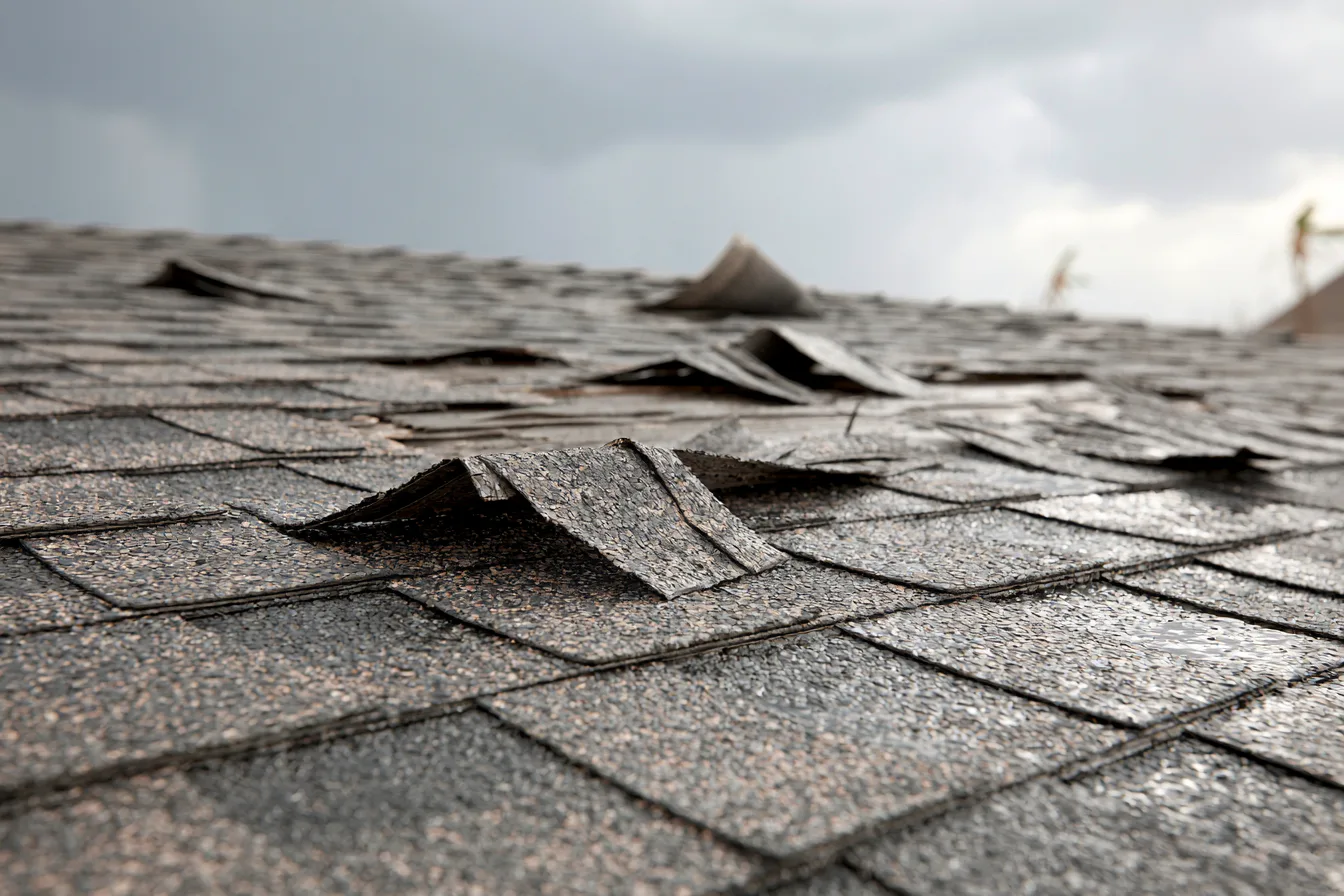
A ceiling stain, a drip at a vent or a patch of missing shingles is a repair question first. The roofer traces the water back to where it gets in, which is often a few feet uphill from the stain, then opens that area and rebuilds it: new boot, new flashing, new shingles worked into the courses around them.
The repair holds when the shingles beside it are still flexible enough to lift and reseal. When they crack as they are handled, or the wood underneath has gone soft, the opening has to grow until it reaches sound material. That is the point where a repair price and a larger job start to be compared.
Roof repair
Leaks, damaged shingles, flashing, pipe boots and the wood beneath them.
See how roof repairs work
Not sure what the roof needs
You do not need a diagnosis to ask for help. A free inspection puts a roofer on the roof, when it is safe to walk, to look at the shingles, the flashing at walls and chimneys, the vents, the valleys and the edges.
After hail or high wind, the same visit looks for what that weather does: bruised or pitted shingles, creased tabs, lifted edges, dented vents and loosened metal. A storm report for Jackson County tells you what the weather did somewhere nearby. Only the roof itself tells you what happened at your address. The answer may be nothing urgent, a defined repair or a wider conversation.

Roof inspections
What a roofer checks on the roof and what happens afterward.
See what an inspection covers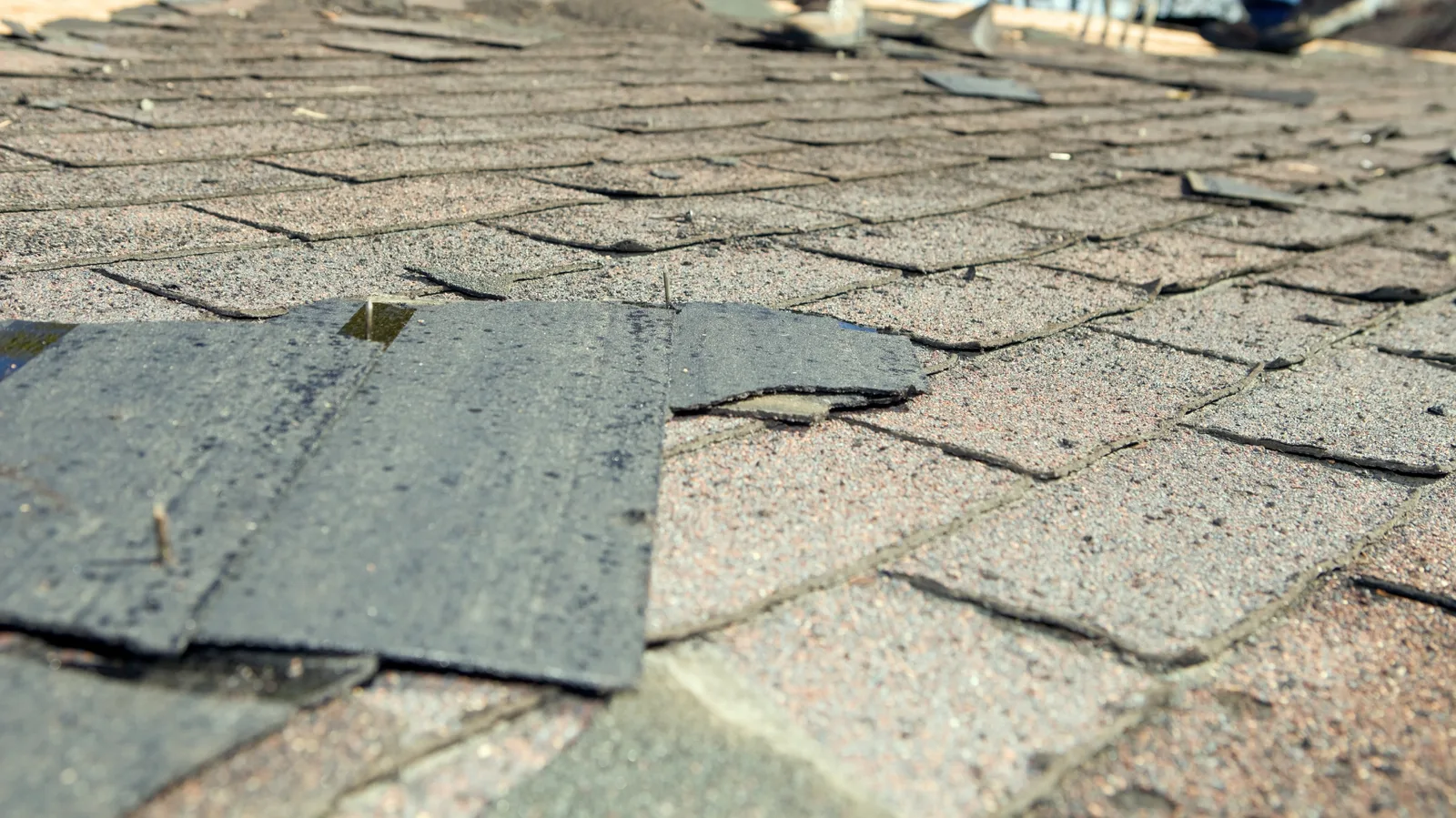
Storm damage
Hail, wind and fallen limbs, from temporary cover to lasting repair.
Read about storm damage
Wear across the whole roof
Replacement makes sense when the problem is the roof’s general condition and no longer one spot: brittle shingles on every slope, granules washed down to the mat, repairs surrounded by more failing material.
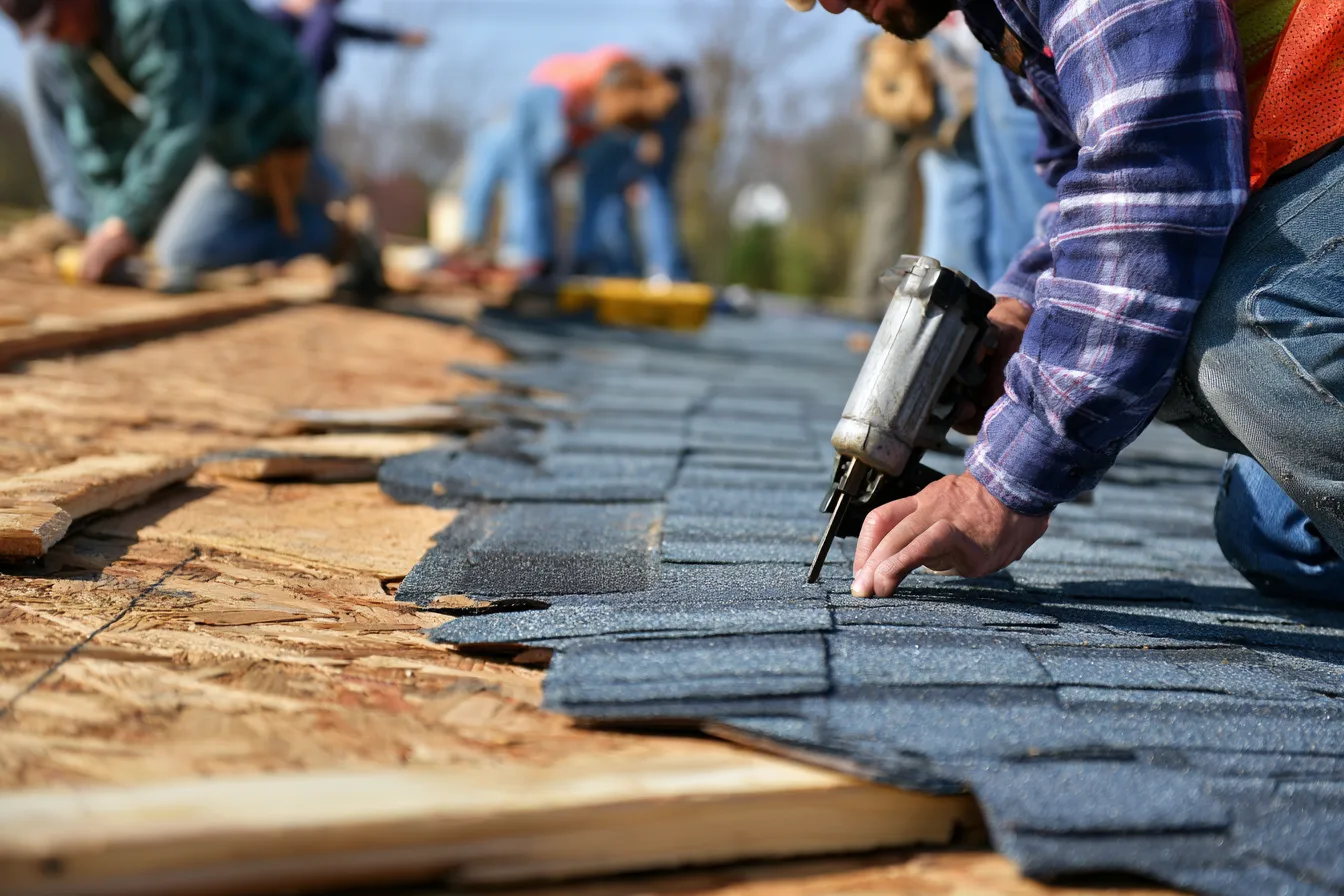
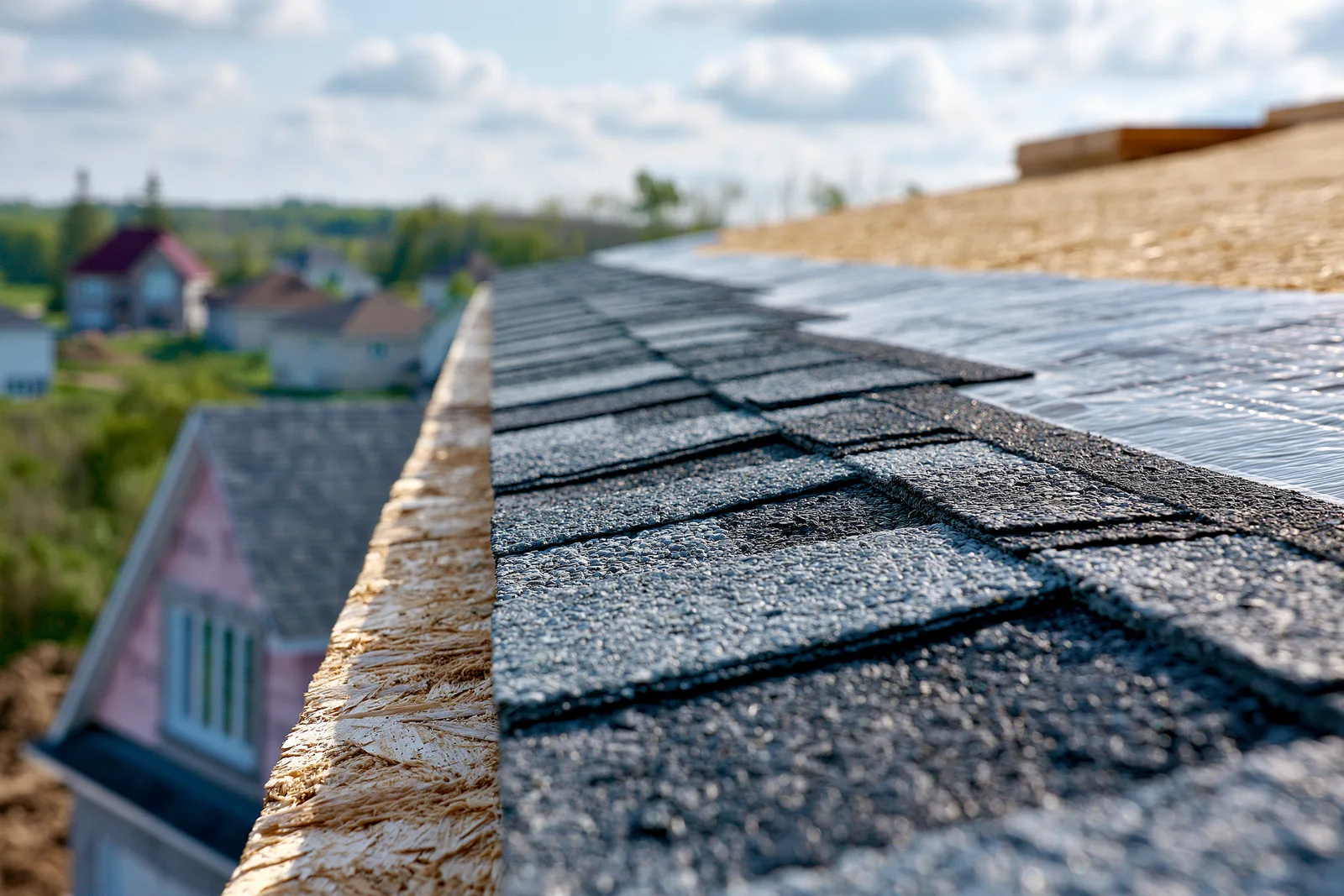
The old covering comes off down to the wood deck, which is the only time anyone sees that deck. Soft boards are replaced, then the roof is rebuilt from the bottom up: edge metal, underlayment, flashing, shingles, ridge and ventilation. Independence’s current guidance allows a single layer of roofing, so plan on a tear-off. The shingle you pick changes the look and the product terms. It does not change what has to happen underneath it.
Roof replacement
Tear-off, decking, the layers beneath the shingles and what moves the price.
See what replacement includes
Shingle roofing
Three-tab, architectural and designer shingles, plus impact ratings.
Compare shingle types
From roof inspection to a scope of work
An inspection earns its keep when it turns into a plain description of the work. “Fix leak” and “replace roof” are not descriptions. A useful scope says which parts of the roof are being opened, what goes back, and what happens if the roofer finds something nobody could see from the surface.
Reading a proposal this way also makes two prices comparable. When one is lower, you can tell whether it is the same work for less money or simply less work.
What a clear roofing scope spells out
- What was found
The failed part, named plainly: a cracked boot on the back slope, step flashing pulled loose at the porch wall, shingles creased along the ridge after wind. If nobody can point to it, the work is still a guess.
- What gets opened
How far the work reaches. A boot repair lifts a few courses of shingles. A wall flashing repair can run the length of the wall and involve the siding above it. A replacement removes everything down to the deck.
- What stays
A repair leaves most of the roof in place, so its condition matters. Shingles near the end of their life will still be near the end of their life after the repair. A replacement keeps sound decking and replaces only the boards that are soft, split or delaminated.
- What is priced only if found
Rotted decking, wet insulation and a buried second layer cannot be counted until the covering is off. They are handled with a stated price per sheet or per foot, agreed before work starts, so a discovery does not turn into an argument.
- What happens around the house
Where the dumpster and materials sit, how the driveway, plants and AC unit are protected, who applies for the permit when the city requires one, and how nails and debris are cleaned up at the end.
Commercial roofing for Independence buildings
A low-slope commercial roof works differently from a shingle roof. It does not shed water by overlap. It keeps water out with a continuous membrane, sealed seams and flashing at every curb, pipe, drain and wall, and it relies on drains or scuppers to get the water off. Leaks start at those interruptions, and water that gets in can travel through the insulation before it shows up over a desk or a stockroom.
That is why the first question on a commercial roof is how far the moisture has gone. A dry roof with an open seam or a split flashing is a repair. A roof that is weathered but dry and well attached may be a candidate for a coating that extends its service. Once the insulation is wet across a wide area, neither of those fixes the problem, and replacing the affected sections or the whole roof becomes the conversation.
Work on an occupied building also has to fit around it: roof access, deliveries, rooftop units that another trade services, and the tenants or customers underneath. Tell us how the building is used and where water is showing up.
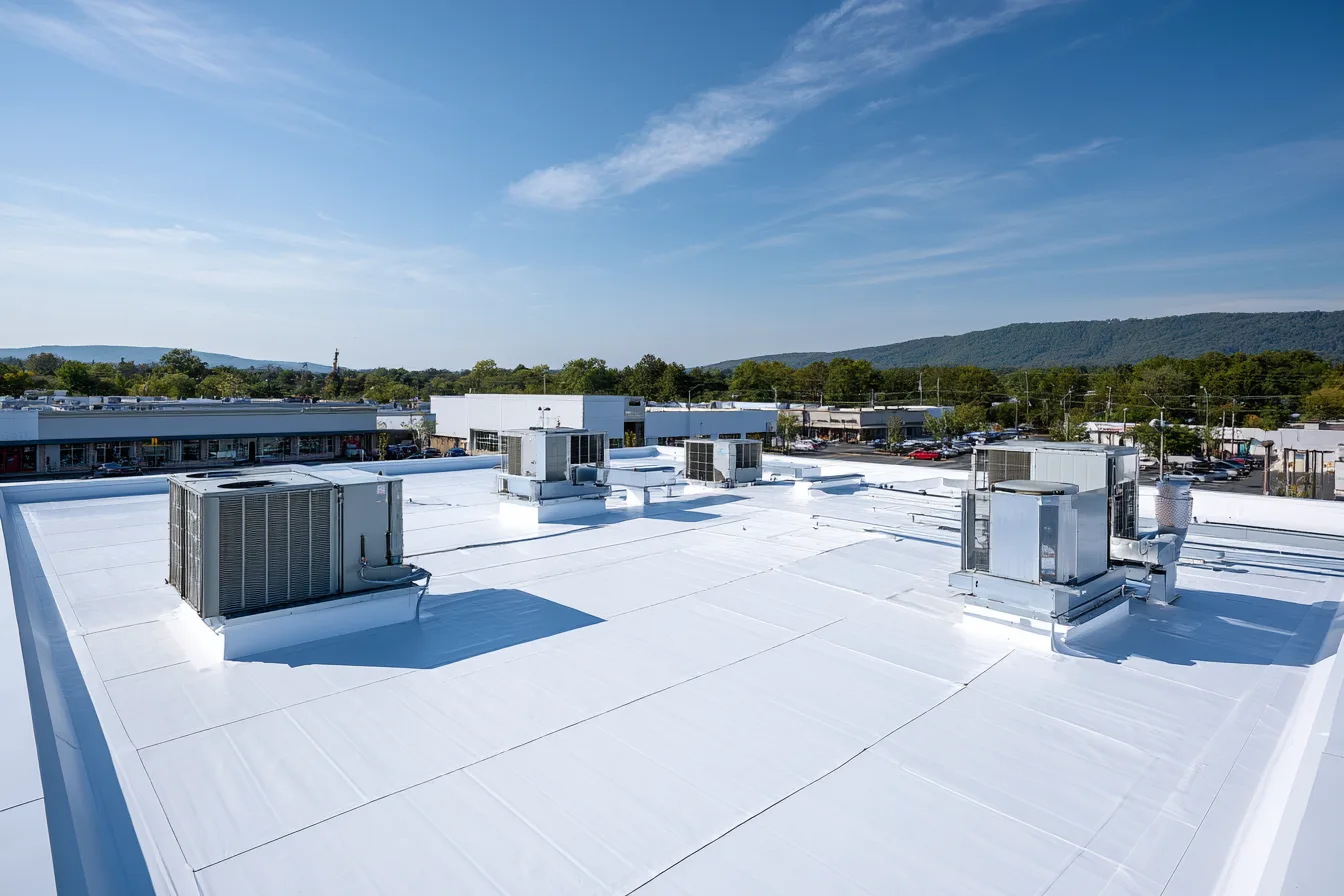
- Commercial roofingAssessment, the repair, restore or replace decision and planning around the building.
- TPO roofingWelded seams, attachment, insulation and how a TPO roof goes on.
- Roof coatingsWhich roofs are candidates and how a coating project is carried out.
- Flat roof repairWhere low-slope roofs leak and how each membrane is repaired.
You do not need to name the failed part
A stain in a bedroom, shingles in the yard or a leak above a tenant space gives the roofer somewhere to begin. You do not need to decide what material or service to request before making contact. Tell us the property location and what you have already seen.
Request a free roof inspection
Get a closer look at the roof and a useful next step. Share a few details below or call Independence Precision Roofing.
Call (816) 427-2878