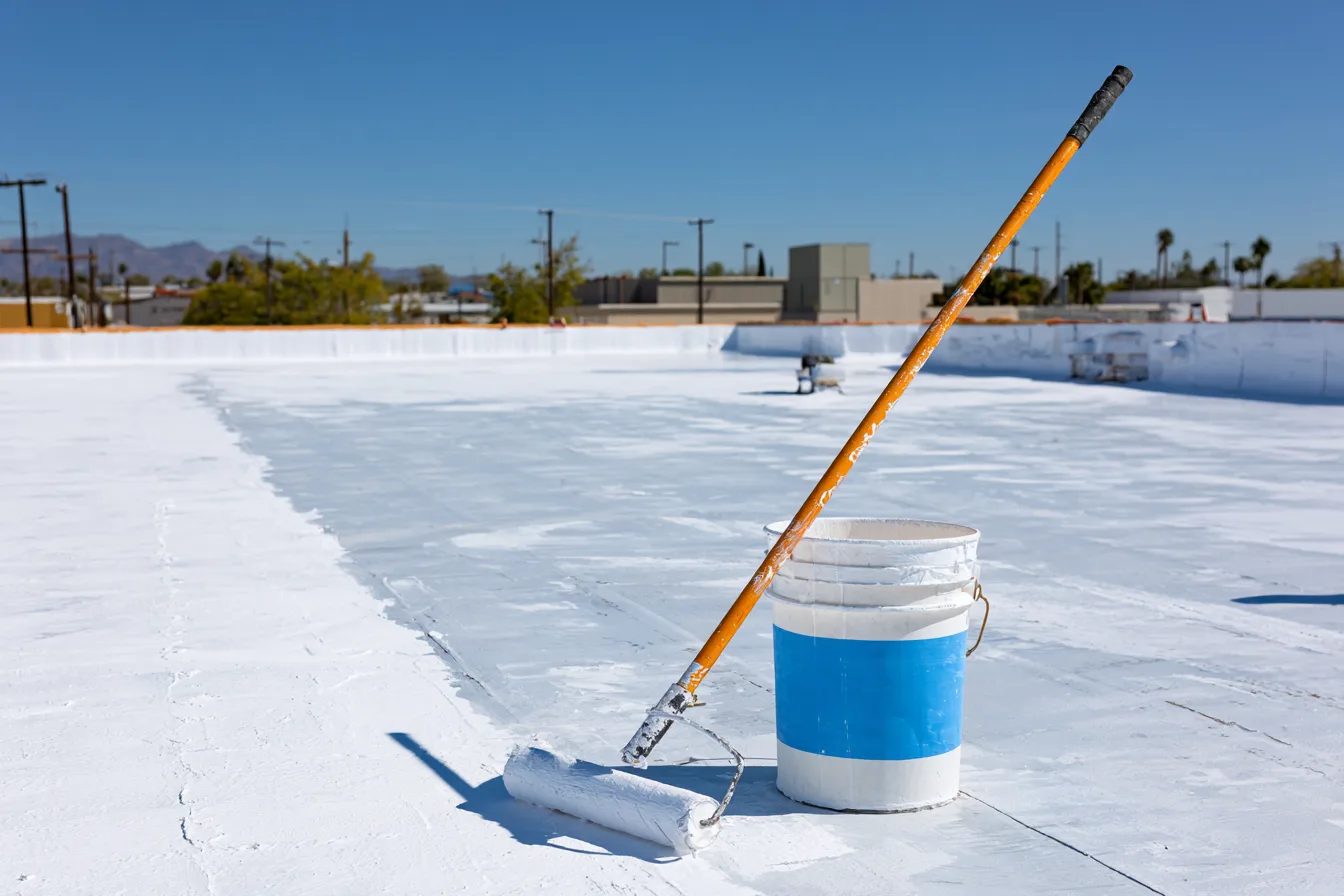
Commercial roof coatings in Independence, MO
A coating can preserve a suitable roof. Its value depends on what remains beneath it and the preparation included in the work.
A free inspection. A closer look at the roof. A useful next step.
Independence roof coatings need a sound starting surface
A roof coating is applied over an existing assembly, so that assembly still has work to do. The substrate must be suitable for the selected system, and damaged details or wet layers cannot simply be ignored beneath a fresh surface.
For an Independence commercial property, start by identifying the roof and its condition. A sound, compatible roof may be a candidate for restoration. A roof with substantial moisture, failed attachment or widespread deterioration needs those problems addressed before a coating becomes a useful option.
Check coating suitability before choosing the product
For example, GAF’s acrylic-over-TPO specification requires a moisture survey, removal of wet areas and adhesion testing. Other systems have their own requirements.
Establish the moisture condition
Determine whether lower layers are dry enough to retain. A moisture survey and appropriate investigation can locate affected areas that need removal or repair.
Confirm compatibility and adhesion
The existing membrane, previous coatings and contamination affect how a new system bonds. Use the selected manufacturer’s preparation and adhesion-testing requirements.
Repair the details first
Seams, penetrations, curbs and drain connections need their specified treatment. Cleaning and applying a field coating do not replace a failed flashing detail.
What a coating can and cannot resolve
A suitable weathered surface
A compatible, properly prepared system may renew the protection of a roof that remains sound underneath. The product and substrate have to be considered together.
Wet insulation or damaged decking
Those components need attention where affected. Covering them with a coating does not restore their condition or establish a sound attachment.
Poor drainage or a failed connection
Water collection and defective details require their own diagnosis. A thicker surface is not a substitute for correcting the underlying water path.
How an Independence roof coating project is carried out
A coating job is mostly preparation. The order matters, because each step depends on the one before it.
Survey and wet-area repairs
Wet insulation is found and cut out, and those areas are rebuilt with new insulation and membrane. Coating over trapped water blisters and fails.
Cleaning
The roof is pressure washed to remove dirt, chalk and loose material, then left to dry completely. A coating sticks to whatever is on top, so that has to be roof and not dust.
Seams, fasteners and flashings
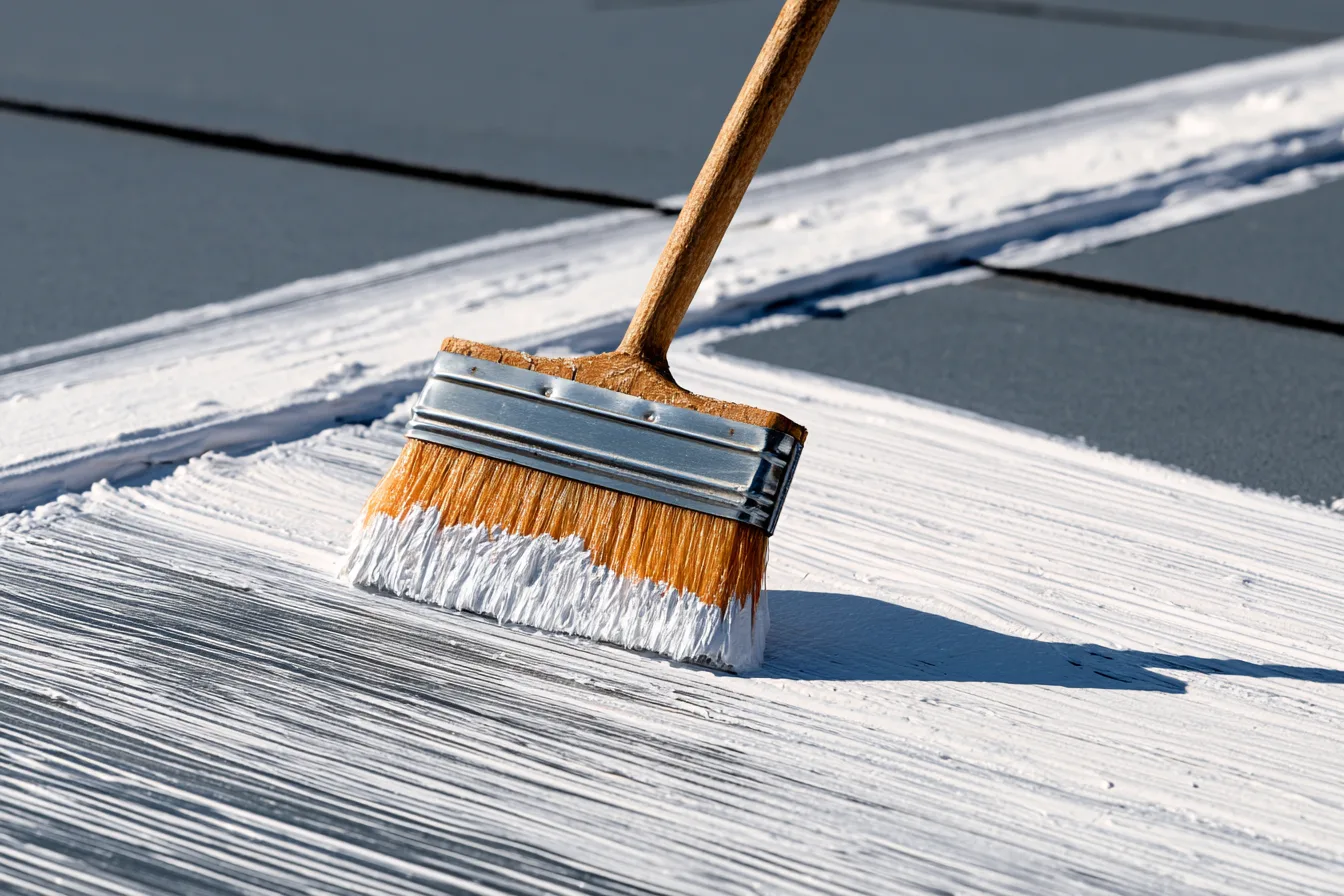
Seams, penetrations, curbs and drains are treated first with sealant or a heavier coating and reinforcing fabric, because these are the places that leak.
Primer where the system calls for it
Some membranes and some coatings need a primer to bond. An adhesion test on the actual roof settles it.
Field coats
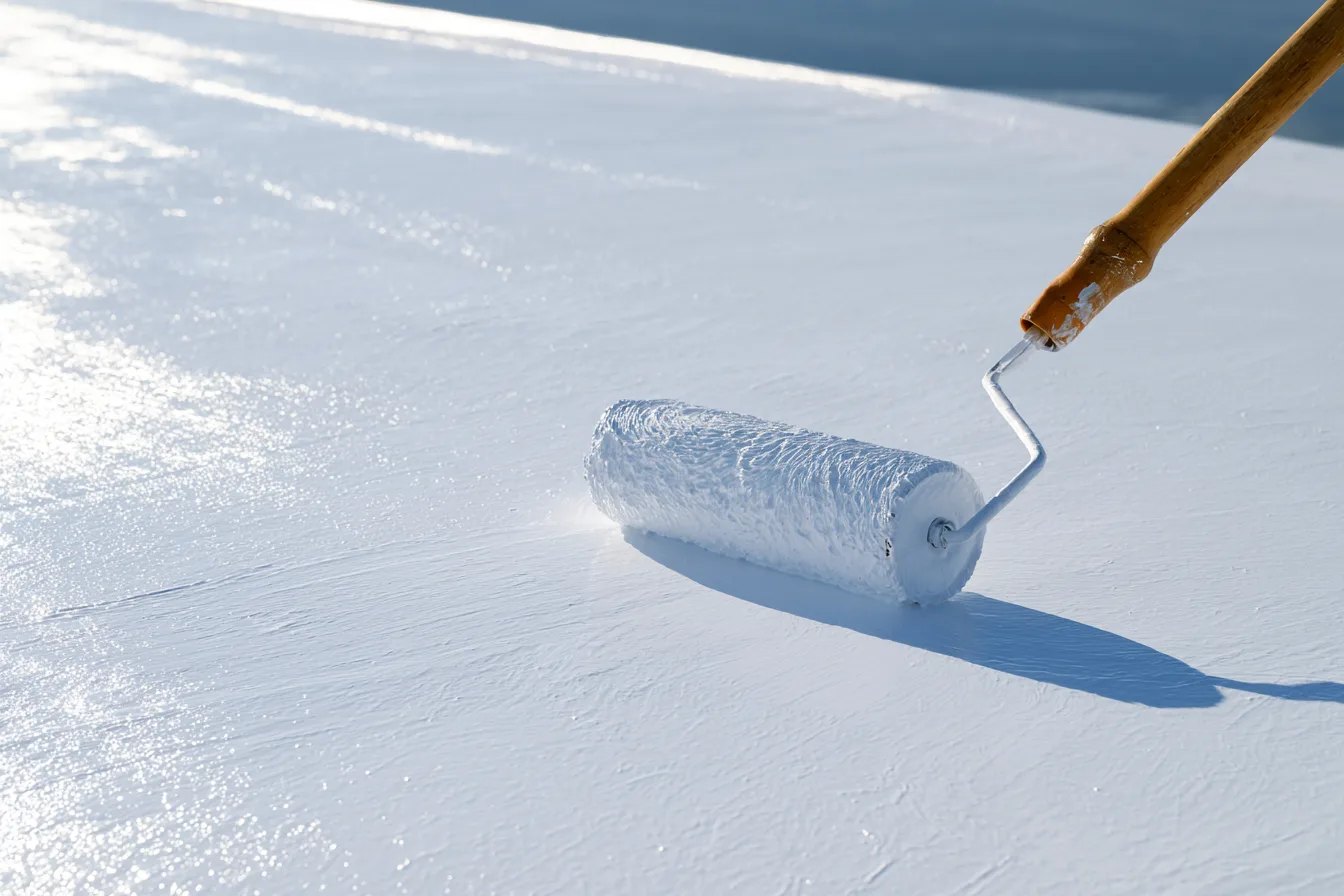
The coating goes on by roller or sprayer in one or more passes at the coverage rate the maker specifies. Thickness is the product. Stretching the material thin is how coating jobs fail early.
Cure and check
Acrylics are water based and need dry, mild weather to cure. Silicones tolerate moisture better and stand up to ponding water, which is why the product is matched to the roof and the season. The finished thickness is checked before the job is closed out.
Compare Independence roof coating proposals
Preparation and repairs
Cleaning, removal of incompatible material, treatment of defects and repair of wet areas are where coating proposals differ most. A price that leaves them out is a price for less work.
The named system
A complete proposal names the coating, any primer, the reinforcement at details and how it will be applied. “Seal the roof” leaves too much unclear.
Application and weather conditions
The maker specifies the coverage rate, the final thickness and the drying and curing conditions. The work sequence has to fit the product and the forecast.
Inspection and coverage terms
Some coating systems require documentation and a review of the finished work before any written coverage applies. A product’s advertised term alone does not establish that a project qualifies.
Roof Coating FAQs
Will a coating stop any roof leak?
No. A coating project needs an appropriate substrate and repaired details. Wet layers, structural damage or failed connections can require different work.
Are silicone and acrylic coatings interchangeable?
No. They have different product and application requirements. The substrate, water exposure, existing coatings and manufacturer specification guide a suitable choice.
Is coating the same as installing a new membrane?
No. Coating retains and treats an existing surface. A membrane recover adds a new covering assembly, and replacement removes specified existing layers. The retained condition matters in each decision.
Can a coating avoid all tear-off?
Not always. Wet or unsound areas may need removal even when the rest of the roof qualifies. The inspection and system requirements determine the scope.
Find out whether your roof is a coating candidate
Tell us about the roof system, leaks and previous work if you know them. Request a free inspection to begin discussing whether restoration fits the building.
Call (816) 427-2878