Flat roof repair in Independence, MO
A leak on a low-slope roof may begin at a seam, an edge or a rooftop detail. The repair needs to follow the water and fit the existing system.
A free inspection. A closer look at the roof. A useful next step.
Find the opening in an Independence flat roof
Water showing above a room is a useful location to record, but it may not sit directly beneath the roof opening. Water can move within the assembly before reaching the interior. Repairing only the nearest visible surface mark may leave the entry point unresolved.
An Independence flat-roof repair begins with the existing material, its seams and the details around the affected area. The condition of insulation and other retained layers matters too. A surface patch is useful only when it connects to sound material and addresses the failure.
Where Independence flat roofs leak and how each is repaired
Leaks on a low-slope roof cluster where the membrane is joined, interrupted or ended. The fix depends on the spot and on what the roof is made of.
- Seams and earlier patches
An open seam or a patch that has let go gives water a straight path in. How it is fixed depends on the membrane. TPO and PVC are repaired with a heat-welded patch. EPDM rubber takes a primed, adhered patch or seam tape. Modified bitumen is patched with more modified bitumen, torched or cold applied. Roof cement smeared on a single-ply does not bond for long and contaminates the surface for the proper repair later, which is why the membrane gets identified first.
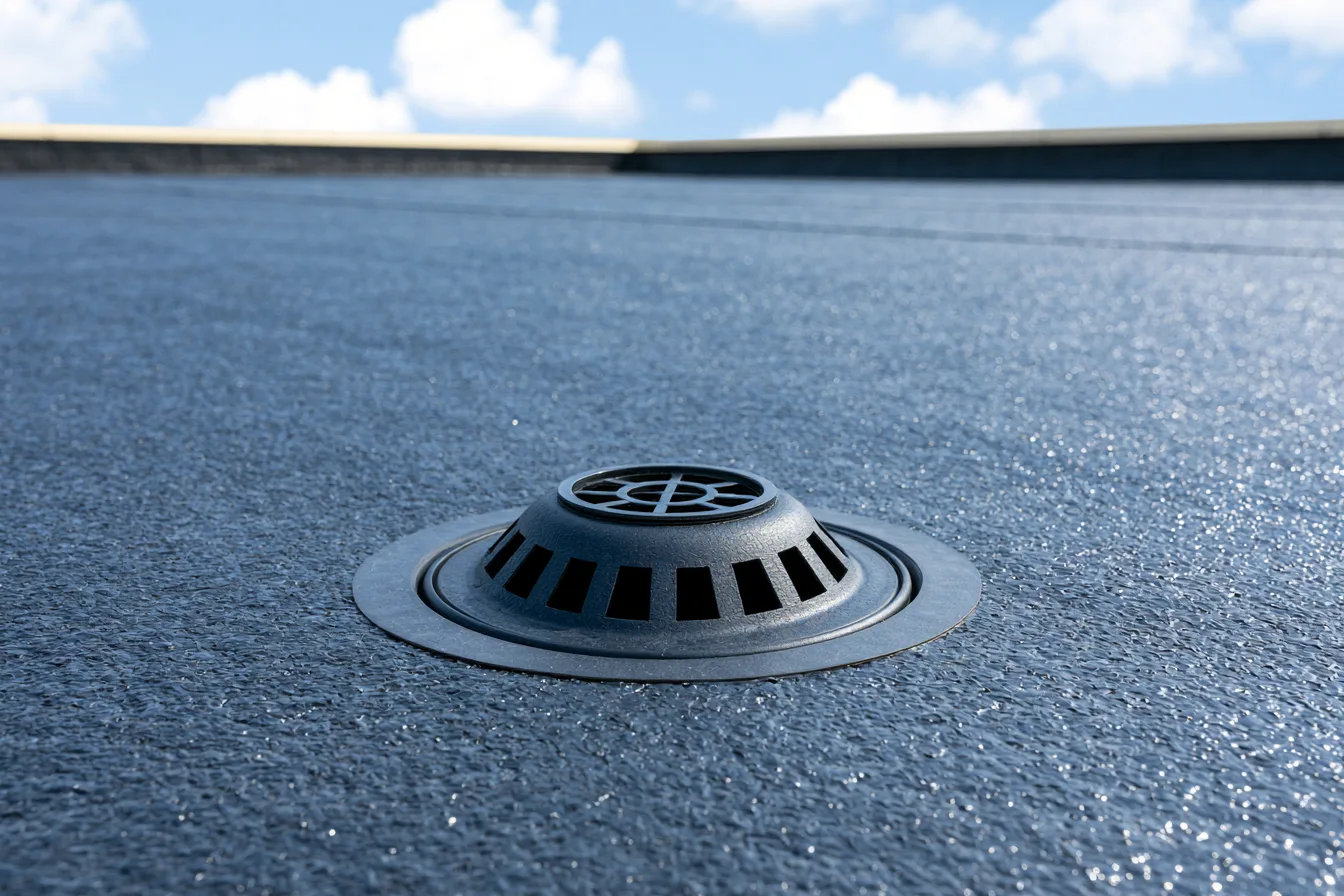
- Drains and scuppers
A clogged drain is a maintenance fix. A drain whose clamping ring has loosened, or whose membrane has pulled out, is a leak straight into the building and needs its flashing rebuilt. Where water ponds because the roof has settled, the low spot may need to be built up with tapered insulation, which is a bigger repair than a patch.
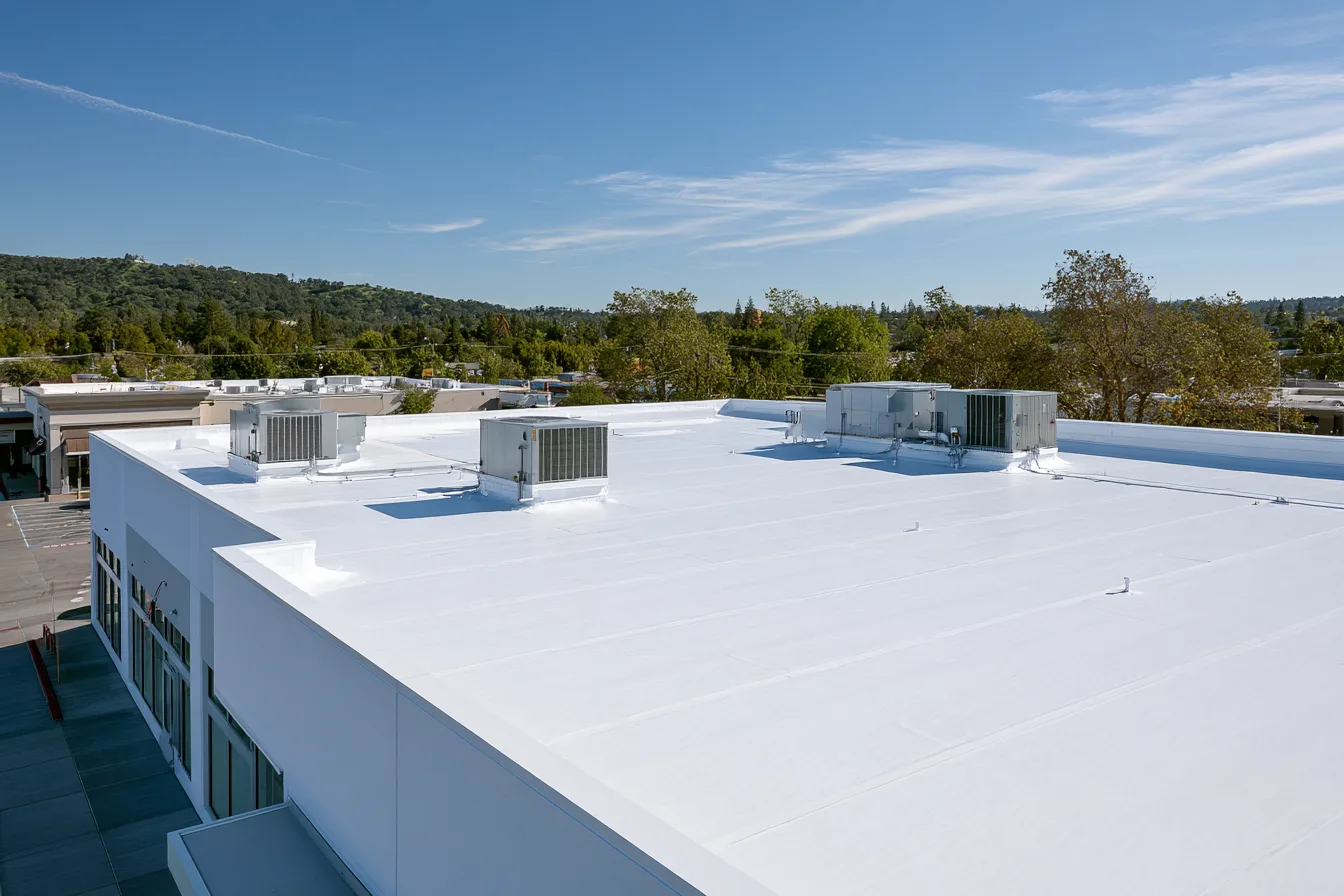
- Curbs and penetrations
HVAC curbs, pipes, conduit and equipment supports are each flashed individually. Corners split, clamps loosen and sealant at the top of a boot dries out. A unit swapped by another trade can leave cut or disturbed flashing behind it.
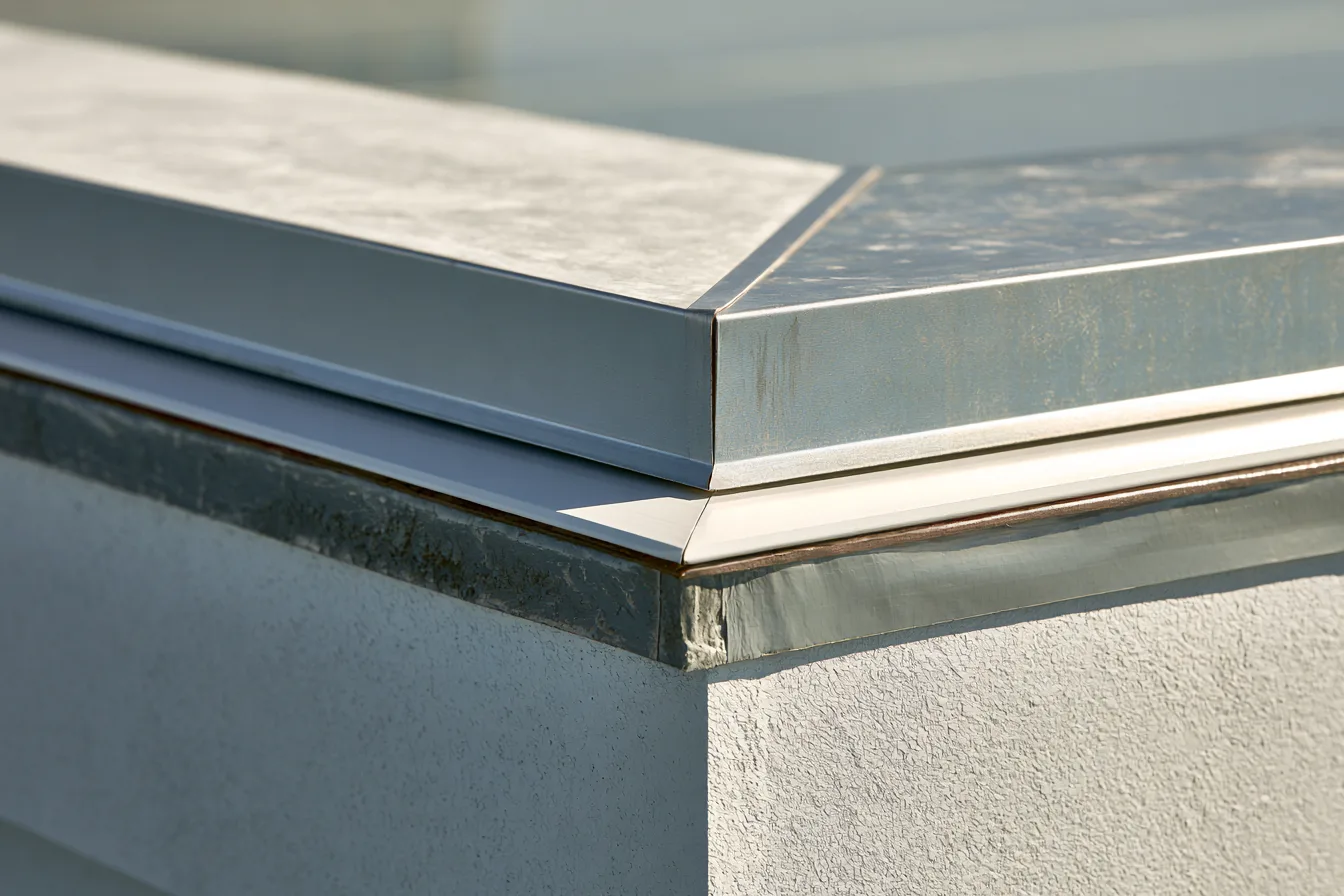
- Edges and parapet walls
Water also gets in at the perimeter: loose coping or edge metal, a termination bar that has pulled from the wall, or cracked masonry above the flashing line. The open field can look perfect while the wall leaks.
How a flat roof repair is carried out
A flat roof repair that lasts follows these steps, whatever the membrane.
Locate the entry point
Interior leak locations are plotted on the roof, then the roofer works outward and uphill along the slope, checking seams and details. On a low-slope roof water can travel a long way between the hole and the drip.
Identify the membrane
TPO, PVC, EPDM, modified bitumen and built-up roofs each need their own repair materials. The wrong one fails and makes the right repair harder.
Check what is wet underneath
If the insulation around the leak is soaked, the membrane is cut open, the wet boards come out, dry insulation goes in and the area is re-covered. Patching over wet insulation traps the water.
Clean and prepare
The surface is cleaned back to sound membrane. Aged single-ply is scrubbed or primed so the patch will bond.
Patch with the same kind of material
The patch extends well past the defect, with rounded corners, and is welded or adhered the way the maker specifies. Failed flashings are rebuilt, not just sealed over.
Check the repair
Welded seams are probed, edges are checked for full adhesion, and the area around the repair gets a last look for related defects.
The membrane and wet layers set the repair boundary
A local opening with sound surroundings
A compatible repair may be practical where adjoining material and the supporting layers remain suitable. The scope should identify the defect and how it will be closed.
Moisture beyond the visible defect
Wet lower layers can extend beyond the obvious opening. Appropriate investigation helps define removal and replacement rather than leaving damaged material trapped.
Several failures across the roof
Repeated leaks and wider deterioration may call for a broader plan. Compare what another repair preserves with what it leaves unresolved.
Keep the building’s use in the repair conversation
A simple interior location plan can help connect reports from different occupants. Note the rooms affected and whether leaks follow particular weather or equipment use. Keep any old roofing records available without delaying the first request if you cannot find them.
Discuss roof access, sensitive stock or equipment, and coordination with other trades. The work plan should explain temporary protection and the areas that need to remain accessible. Those details are property-specific; they should not be assumed from a generic repair price.
Flat Roof Repair FAQs
Does standing water always mean the roof must be replaced?
Not automatically. Drainage, roof shape, the time water remains and the membrane condition need assessment. A blocked drain and a deteriorated assembly require different work.
Can a coating replace flat-roof repairs?
A coating project requires suitable material and prepared details. It does not remove the need to address wet layers or failed connections. See commercial roof coatings for suitability questions.
Can any roof patch be used on a low-slope roof?
No. TPO, PVC, EPDM, asphaltic systems and coatings have different compatibility and preparation requirements. Identify the assembly before selecting a repair material.
What if the same area keeps leaking?
Share the previous repair history and when water returns. A repeated symptom may mean the entry point, adjoining detail or affected lower layers need further investigation.
Tell us where water is affecting the building
Share the property location, affected space and what has already been tried. Request a free roof inspection to discuss the next useful repair step.
Call (816) 427-2878