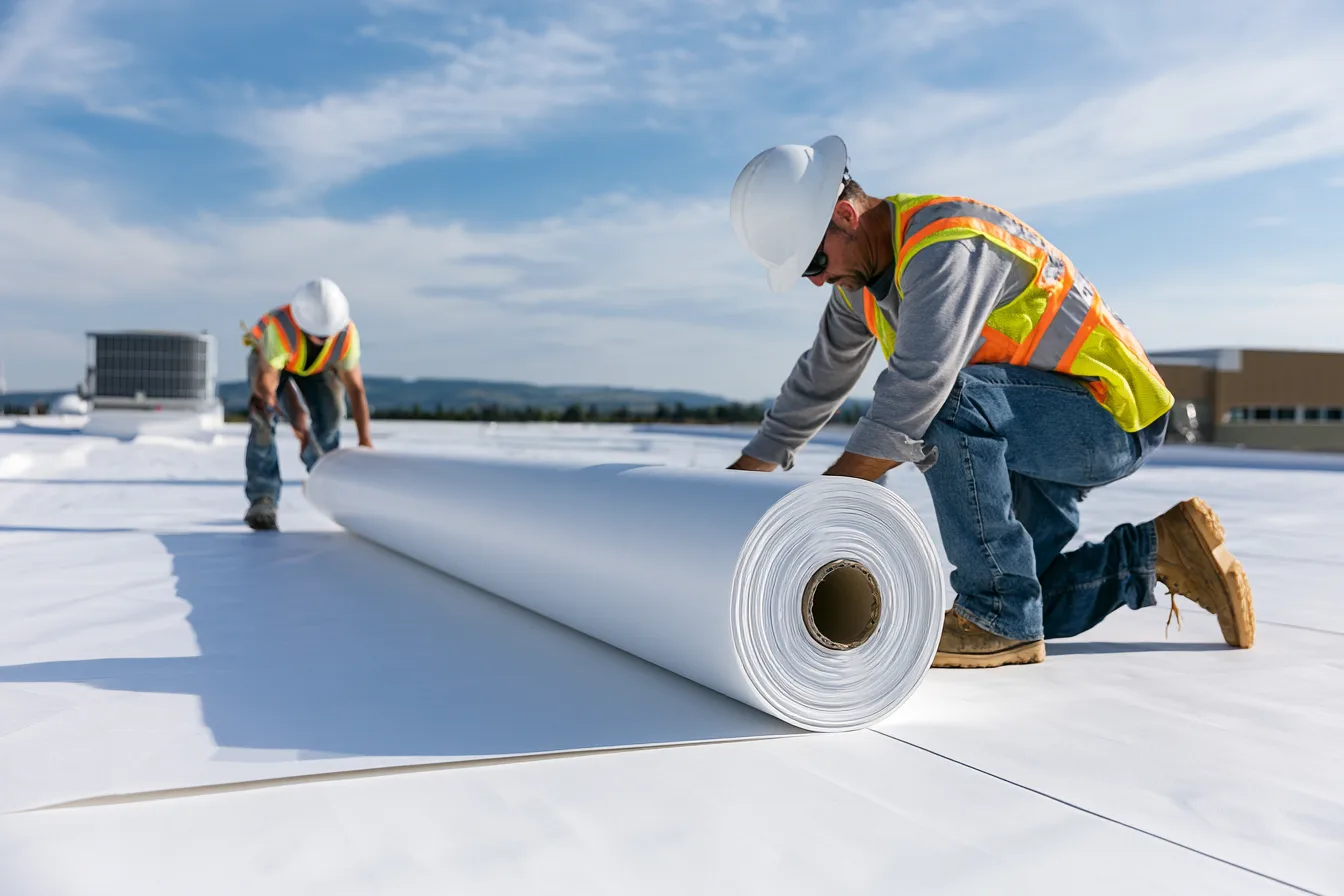
TPO roofing in Independence, MO
A TPO project includes more than the membrane. Start with the seams, insulation, attachment and details on the existing building.
A free inspection. A closer look at the roof. A useful next step.
TPO roof work for Independence buildings
TPO is a thermoplastic single-ply membrane used on low-slope roofs. Its seams are heat welded, while the perimeter, drains and equipment curbs require their own connections. Those details are part of the waterproofing system, not finishing touches.
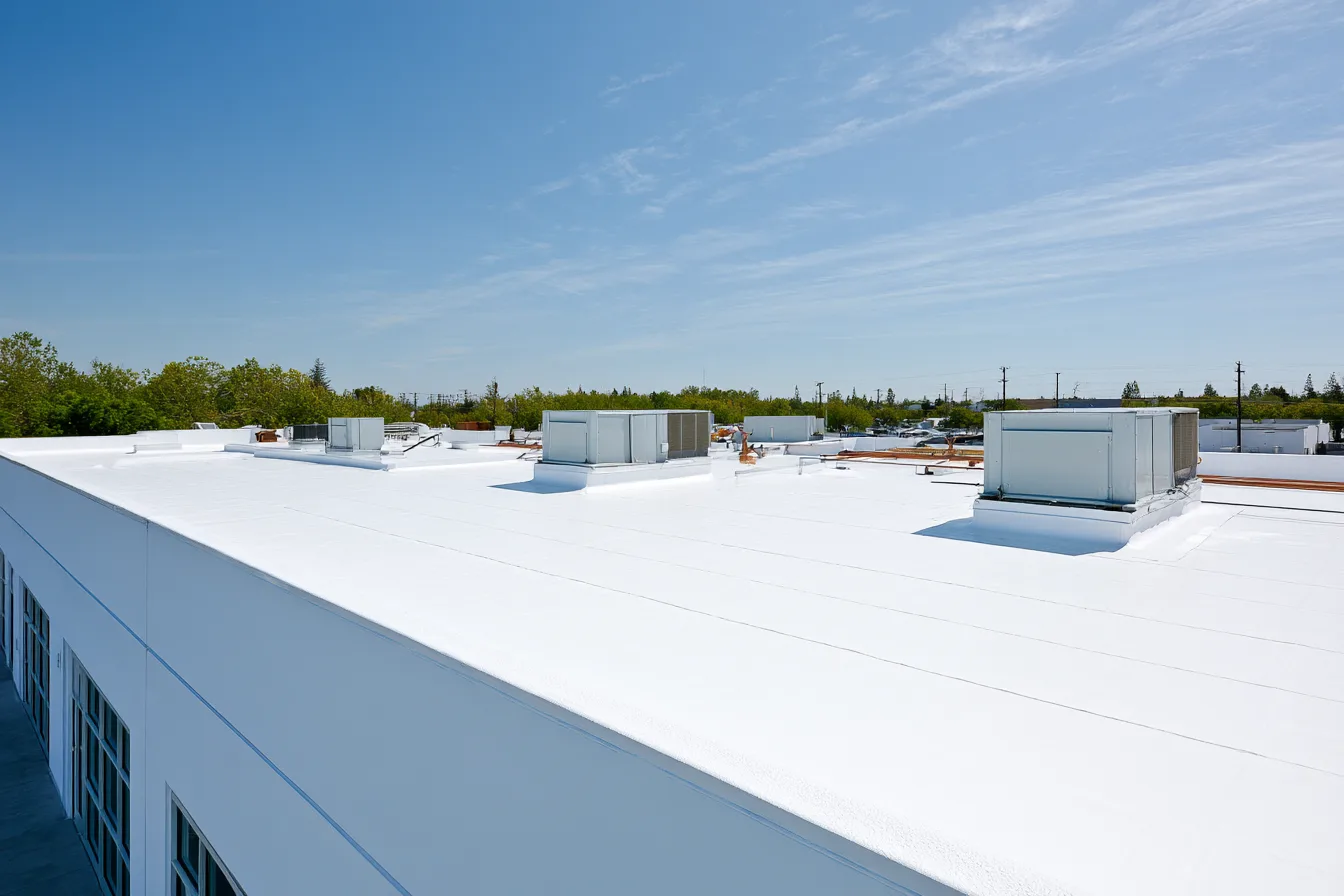
For an Independence building owner, the useful question is whether the existing roof needs a compatible repair, a larger renewal or replacement of damaged layers. Confirm the membrane and the assembly before choosing materials. A white roof seen from a window does not identify the system on its own.
What changes an Independence TPO roofing scope
TPO is sold as a membrane, but it performs as a set of connected parts. Each of these changes what a repair or a new roof involves.
- Seams
TPO sheets are joined by melting the overlap together with hot air, which makes the seam as strong as the sheet when it is done right. Every weld is then checked by dragging a probe along its edge. On an existing roof, open or poorly welded seams are found the same way and re-welded or covered with a welded strip.
- The aging surface
New TPO welds easily. Weathered TPO has a chalky surface that has to be cleaned and prepared before a patch will fuse to it, and membrane that has gone brittle or crazed may not take a weld at all. That is one of the real limits on how long a TPO roof can be kept going with repairs.
- Curbs, pipes and drains
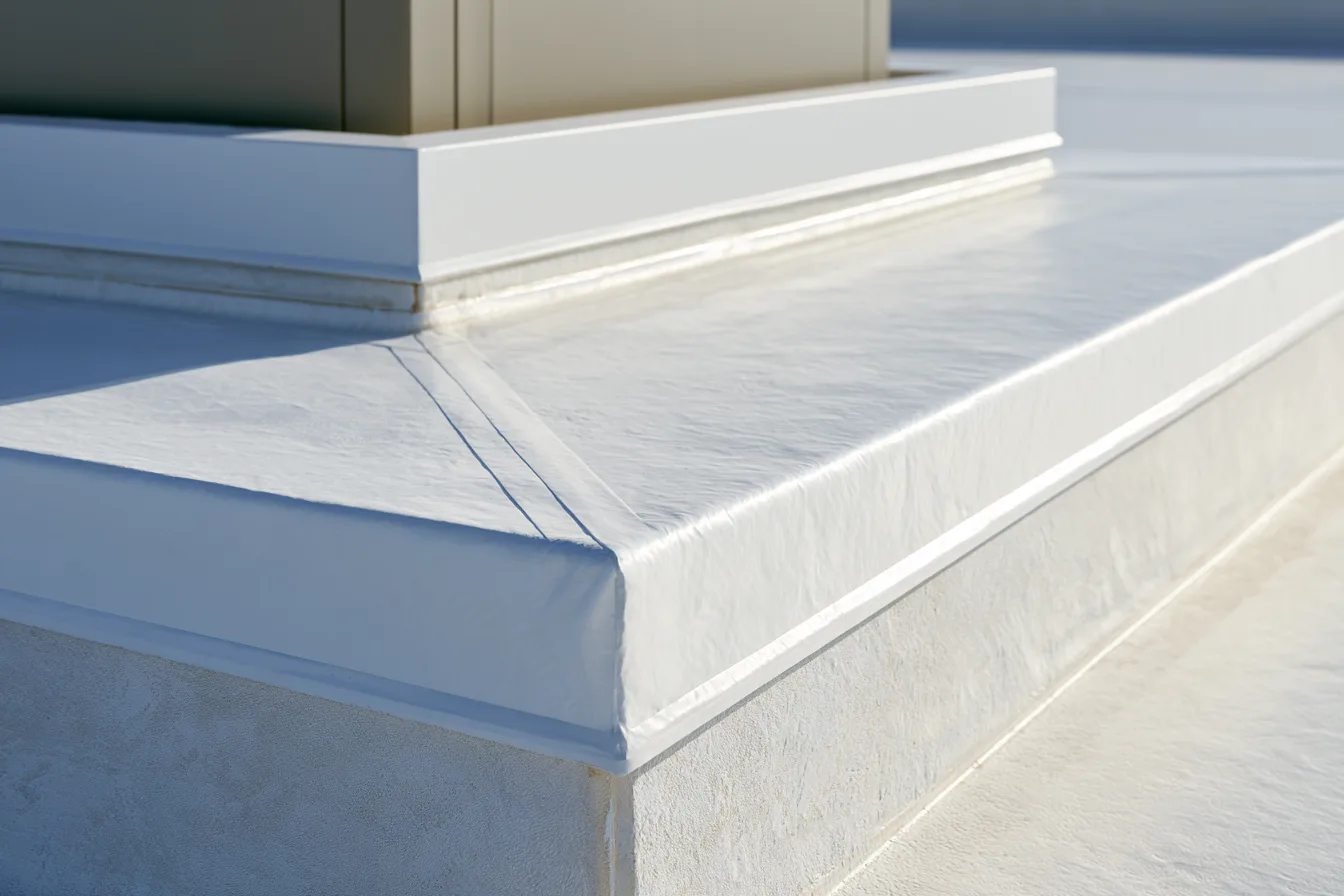
Rooftop units sit on curbs wrapped in membrane, with reinforced corners where three planes meet. Pipes get molded boots or field-wrapped flashing, clamped and sealed at the top. Drains are clamped over the membrane with a ring. These details are made by hand, one at a time, and they are where workmanship shows.
- Attachment and edges
The membrane is either screwed down through plates hidden in the seams or glued to the board beneath it. Wind pulls hardest at corners and perimeters, so fastening is tighter there, and the metal edge or coping that finishes the roof has to hold the membrane against that pull.
- Insulation and the deck
Under the membrane are rigid insulation boards, often a cover board, and the structural deck. Wet insulation or a rusted or rotted deck turns a surface repair into a cut-out-and-rebuild repair, or into a replacement when it is widespread.
Repair, recover or replace the TPO roof
Repair a defined defect
A localized defect in otherwise serviceable material may suit a compatible repair. The scope should identify the preparation, patch or seam work and the limits of the affected area.
Evaluate a recover
Retaining the old roof requires evidence that the assembly is suitable. Moisture, deterioration, existing layers, attachment and the applicable local requirements must be resolved first.
Replace affected assemblies
Widespread deterioration or moisture can make retaining the old layers inappropriate. Replacement permits the damaged components to be addressed rather than sealed beneath a new surface.
Manufacturer recover guidance informs the assessment. It does not establish permission to recover a particular Independence roof.
How a TPO roof goes on an Independence building
Whether the old roof is removed or covered, the work follows the same order.
Decide what stays
Moisture findings and the number of existing roofs decide between tearing off to the deck and laying new membrane over the old one. Wet areas come out either way.
Insulation and cover board
Insulation boards are laid and fastened, with tapered boards used where the roof needs help draining. A dense cover board on top gives the membrane a firm base and stands up better to hail and foot traffic.
Membrane
Sheets are rolled out, left to relax, then fastened or glued in place, working so that the laps shed water toward the drains.
Welded seams
Laps are hot-air welded and then probed along their length. Test welds at the start of the day confirm the welder’s heat and speed for that day’s temperature.
Flashings and details
Curbs, pipes, drains, walls and corners are flashed by hand. This is the slowest part of the job and the part that decides whether the roof leaks.
Edges and walkways
Edge metal or coping closes the perimeter, and walkway pads go where service techs walk to the units.
Plan access before the roof work starts
Identify roof access, occupied areas and the equipment that other trades may need to service. HVAC work and roofing details can overlap at curbs and penetrations; responsibility for disconnecting or moving equipment should be clear before work begins.
If an existing manufacturer warranty applies, keep its document and roof history available. Confirm its repair procedures with the issuer and contractor. A project scope should not assume that any patch material or installer preserves the same coverage.
TPO Roofing FAQs
Is every white flat roof TPO?
No. Other membranes and coatings can also be white. Product records, construction details and inspection help identify the existing roof before repair materials are chosen.
Can an older TPO roof be repaired?
Sometimes. The defect, membrane condition and ability to prepare and join compatible material matter more than age alone. Wet lower layers or widespread deterioration may change the scope.
Can TPO receive a coating?
Some manufacturer systems are designed for suitable TPO substrates, with specified cleaning, repairs and adhesion testing. Suitability needs confirmation for the actual roof. Our coating guide explains that assessment.
Is a manufacturer warranty included?
Ask for the exact proposed warranty, eligibility requirements, issuer and registration responsibility. Availability cannot be inferred from the TPO material name alone.
Start with your existing commercial roof
Share the building location, its use and what you know about the roof. A free inspection is a useful starting point for a TPO repair or replacement conversation.
Call (816) 427-2878